
Practical eating skills for adults in Christchurch — body awareness, gentle swaps, and small daily steps. Educational sessions and workshops, not medical care.
Sparkfresh.ddd is a Christchurch-based education service on Innes Road, Mairehau. We help adults build calmer, more flexible eating habits through workshops, group sessions, and one-to-one lifestyle education sessions. We are not a hospital, GP clinic, psychology service, or registered dietitian practice. Our team shares evidence-informed ideas drawn from everyday nutrition science and behaviour research — always as general education, never as personalised medical guidance.
Most visitors come to us after rigid meal plans stopped working. Instead of counting every gram or labelling foods as good or bad, we focus on body signals, realistic swaps, and small steps that fit real life in New Zealand. Research from the University of Otago suggests flexible eating patterns are often easier to maintain than highly restrictive approaches, especially with supportive guidance. Whether you cook for a family, work long hours, or simply want a steadier rhythm with food, our materials explain practical skills you can try at your own pace.
In-person sessions in Christchurch on hunger awareness, soft swaps, and habit building. Small groups, practical exercises, no weigh-ins.
From $35 per session. Dates on our Events Calendar. Enquire to book.
A free 20-minute phone or video call to learn what we offer and whether our educational approach suits your goals. No obligation.
Free articles on this website covering body signals, swaps, mini habits, and flexible eating. Written for general learning only.
What we do not offer: Medical diagnoses, meal prescriptions for clinical conditions, weight-loss guarantees, supplements, or treatment for eating disorders. If you need clinical support, we encourage you to contact a registered dietitian or your GP.
Core pillars
Daily progress
Weekly joy meal
Christchurch based
Your body sends signals long before your mind catches up. A gentle growl in the stomach, a slight drop in energy, or a hollow feeling between meals — these are signs of physical hunger, not a character flaw. Learning to notice them takes practice, especially if you have spent years eating by the clock or ignoring cues during busy days. Start by pausing for ten seconds before you reach for food and asking: am I physically hungry, or am I bored, stressed, or simply following habit? There is no wrong answer — only information. On the other side of the meal, fullness arrives in stages. The first few bites taste vivid; midway through, satisfaction builds; near the end, the food loses some of its appeal. That subtle shift is your cue to slow down. Research published in Appetite journal found that people who ate more slowly reported greater awareness of satiety and less tendency to overeat at the next sitting. Put your fork down between bites, sip water, and check in with your stomach rather than your plate. Over time, these pauses become second nature — and meals feel calmer, not like a test you might fail.
Read More About Body Signals
Switching to a seeded wholegrain loaf adds fibre and keeps you satisfied longer. You still get toast for breakfast — just a version that works harder for you.
Plain Greek yoghurt with fresh kiwifruit or a drizzle of honey gives you protein and probiotics without the sugar spike of flavoured tubs.
A squeeze of lemon or a few frozen berries in sparkling water offers the fizz you enjoy with far less added sugar across the week.
The idea is not deprivation. It is choosing a slightly more nourishing option when it fits, without drama. A 2023 review in Nutrients noted that gradual food substitutions are associated with better adherence than abrupt eliminations. You keep the foods you love in rotation — you simply widen the menu around them.
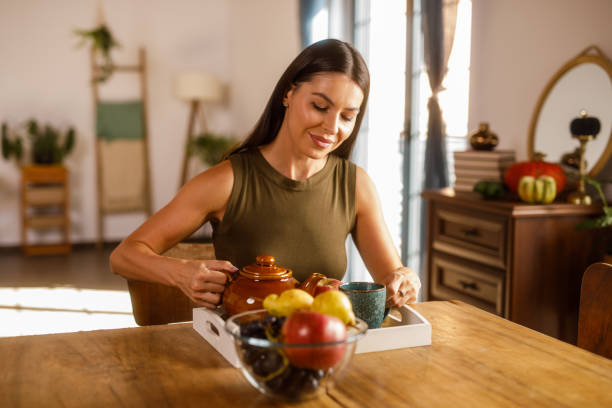
Big lasting changes rarely happen in a single weekend. What tends to stick are tiny actions repeated until they feel ordinary. Drink one extra glass of water before your morning coffee. Add a handful of spinach to whatever you are already cooking. Walk around the block after dinner instead of scrolling on the couch. Each of these takes less than five minutes. Behavioural science calls this habit stacking: attaching a new behaviour to something you already do reliably. If you always boil the kettle at 7 a.m., place a filled water bottle beside it the night before. If Sunday is your grocery day, add one new vegetable to the trolley without changing anything else. Over several weeks, these micro-shifts may compound. Research suggests simple repeated actions often become more automatic over time — though timelines differ for everyone. The point is patience, not pressure. Slow progress is still progress, and a steady foundation often outlasts short bursts of intensity.
Strict rules can create a back-and-forth rhythm — restrict hard, then swing back with intensity. A flexible plate avoids that cycle. Plan one meal each week that is purely for pleasure: fish and chips by the beach, a slice of cake at a friend's birthday, or your favourite takeaway on a Friday night. Eat it slowly, taste it fully, and move on without a guilt monologue. Research on restrained eating suggests that people who allow planned enjoyable meals may experience fewer intense cravings than those who label foods forbidden. The key word is planned. You are not sneaking or compensating with extra exercise. You are acknowledging that joy is part of a sustainable pattern. During the rest of the week, aim for balance — vegetables, protein, whole grains, hydration — but leave room for the foods that connect you to culture, family, and comfort. A flexible approach does not mean eating without thought. It means thought without punishment.
Weekly joy meal idea: Choose your day, decide what you genuinely want, eat it mindfully, and return to your usual rhythm the next morning. No compensation required.
Join our upcoming workshops and community sessions in Christchurch. All events are educational — practical skills, not clinical programmes. Fees shown are indicative; confirm the current price when booking.
Learn to rate hunger from 1 to 10 and practise pausing before meals. Mairehau Community Hall, 10:00 a.m. $35
Live demonstration of five easy ingredient swaps using local New Zealand produce. 2:00 p.m.
Combine gentle movement with habit-stacking tips along the Avon River track. 8:30 a.m.
Open discussion on planning joy meals and managing social eating without stress. Online and in person.
Many people explore our educational materials after years of rigid plans. We focus on building skills — noticing hunger, making soft swaps, practising flexibility — rather than prescribing a fixed menu. We do not measure success by body weight or promise specific outcomes. Our aim is to help you feel more informed and calm around everyday eating.
No tracking is required. Instead, we use simple frameworks like the hunger scale, balanced plate visuals, and weekly reflection prompts. If you enjoy data, you may choose to track occasionally, but it is never mandatory.
No. We do not offer weight-loss programmes, before-and-after promises, or body transformation claims. Our content is about eating skills and everyday food choices. If weight change occurs, it is incidental and individual — we do not track or guarantee it.
Some people report feeling more aware within a few weeks of practising body signals. Habit changes may feel more natural after consistent practice over several weeks. Everyone's timeline differs. These are subjective experiences, not guaranteed results.
Absolutely. The flexible plate approach includes planned joy meals — usually once a week — where you eat favourite foods without guilt. The goal is balance over time, not elimination of foods you love.
Whether you are curious about body signals, soft swaps, or building mini habits, we are here to explain our workshops and resources. Contact us for current session dates, fees, and availability in Christchurch.